
What Are Motor Speech Disorders?
Communication is a complex process that most people take for granted until something disrupts it. Motor speech disorders are a class of speech disorders that disturb the body’s natural ability to speak due to neurologic impairments. These conditions are fundamentally defined as impairments in the systems and mechanisms that control the movements necessary for the production of speech.
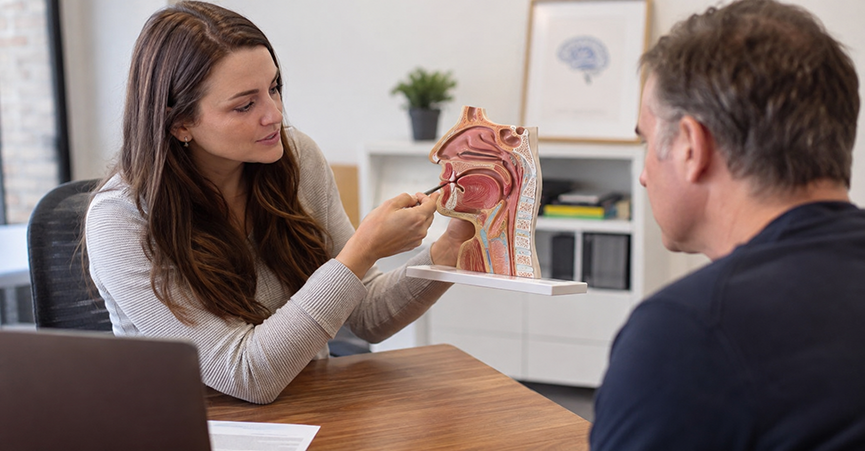
To truly understand these disorders, it is helpful to look at how speech is produced. Verbal communication involves a sequence of processes culminating in the motor execution of a cortically determined set of instructions. When a person decides to speak, their brain must send precise, coordinated signals to the muscles of the respiratory system, the vocal cords, the palate, the jaw, the tongue, and the lips.
When an individual has a motor speech disorder, the underlying neurological pathways are damaged. This means that the term motor speech disorders refers to impairments of speech motor processes following damage to the central or peripheral nervous system. These disorders do not typically affect a person’s intelligence or their understanding of language. The patient usually has a full knowledge of words and what they want to say, but they are finding it difficult to physically articulate those thoughts. This makes these conditions distinct from language disorders like aphasia, which affect the comprehension and formulation of language itself.
The Mechanics of Normal Speech Production
Speech is generated through the coordinated effort of several subsystems. The term encompasses coexisting neurogenic disorders of several or all the underlying processes of speech, including respiration, phonation, resonance, articulation, and prosody.
Respiration provides the breath support needed to generate sound. Phonation occurs when the vocal folds in the larynx vibrate to produce voice. Resonance refers to how that sound is shaped as it travels through the throat, mouth, and nasal passages. Articulation is the precise movement of the lips, tongue, and jaw to form specific consonants and vowels. Finally, prosody is the rhythm, stress, and intonation of speech that gives it natural melody and emotion. A breakdown in any of these areas can lead to a motor speech disorder.
The Two Main Types of Motor Speech Disorders
When discussing these conditions, clinicians generally divide them into two primary categories. The two major types of motor speech disorders are dysarthria and apraxia. While both affect speech production and can sometimes occur together, they have very different underlying mechanisms and require different treatment approaches.
Understanding Dysarthria
Dysarthria refers to a group of motor speech disorders marked by muscle weakness, paralysis, and slowness and dyscoordination of the muscles for speech production. It is characterized by weakness, slowness, incoordination, and imprecise movements of the muscles of speech.
Because the muscles themselves are weak or paralyzed, a person with dysarthria may have trouble controlling their breath for speech, their vocal cords may not vibrate efficiently, and their tongue and lips may not move accurately. This often results in speech that sounds slow, imprecise, and distorted. Depending on the severity of the condition, dysarthria can significantly impact communication between the patient and those around them.
Understanding Apraxia of Speech
Apraxia of speech is an entirely different mechanism. It is a motor planning and programming disorder. In these cases, the physical strength of the speech muscles is typically intact, but the brain struggles to sequence the specific speech movements required.
Think of apraxia as a breakdown in the blueprint rather than a breakdown in the building materials. The brain knows what it wants to say, but it cannot effectively plan how to say or express that idea and then finally say it. Descriptions of apraxia often cite difficulties in motor planning and executing oral speech movements. Because the muscles are strong, non speech oral motor movements, such as chewing or swallowing, are typically not affected by apraxia alone.
Detailed Breakdown of Dysarthria Subtypes
Dysarthria is not a single, uniform condition. Because the nervous system is vast and complex, the specific type of dysarthria a person experiences depends heavily on the neurological site of the lesion. Clinicians categorize dysarthria into several distinct types based on the presenting symptoms and the area of brain damage.
Spastic Dysarthria
Spastic dysarthria is associated with damage to the upper motor neurons. This type is often characterized by a strained, effortful voice and a notably slow rate of speech. The muscles used for speech are tight and hypertonic, resisting movement. Individuals with spastic dysarthria often sound as though they are speaking against a great deal of physical resistance.
Flaccid Dysarthria
In contrast to spasticity, flaccid dysarthria occurs due to lower motor neuron damage. This results in reduced muscle tone and profound weakness. Speech is often characterized by a breathy, weak voice and nasal emission. Because the soft palate may be weak, air escapes through the nose during speech, causing a highly nasal sound.
Ataxic Dysarthria
Ataxic dysarthria is caused by damage to the cerebellum, the part of the brain responsible for coordination and balance. This subtype is characterized by irregular articulatory breakdowns and prosody distortions. Speech may sound drunken, slurred, or explosive, with unpredictable variations in pitch and volume.
Hypokinetic Dysarthria
This type is most commonly associated with Parkinson’s disease and involves damage to the basal ganglia. It is characterized by reduced loudness, and a rapid or muffled speech pattern. Individuals may have a rigid, flat facial expression, a breathy voice, and they may speak in short, rapid bursts that blur words together.
Hyperkinetic Dysarthria
Also related to basal ganglia dysfunction, hyperkinetic dysarthria is defined by involuntary movements affecting speech. Unpredictable spasms or tremors in the speech muscles can interrupt the flow of talking, leading to sudden voice arrests, prolonged sounds, or harsh vocal quality. Conditions like Huntington’s disease often present with this type.
Mixed Dysarthria
It is very common for individuals to experience multiple types of dysarthria simultaneously, especially after complex brain injuries. A mixed presentation means that multiple systems are affected, which is highly common after a stroke. The most frequent combinations are spastic flaccid (often seen in ALS) and spastic ataxic (frequently seen in multiple sclerosis).
Apraxia of Speech: Pediatric vs. Acquired
Apraxia of speech presents differently depending on when it occurs in a person’s lifespan. While the core issue of motor planning remains the same, the context of the disorder changes how it is diagnosed and treated.
Childhood Apraxia of Speech
When a child is born with this condition or develops it during early developmental stages, it is referred to as childhood apraxia of speech. A motor speech disorder is present when a child struggles to produce speech because of problems with motor planning or muscle tone needed to speak.
Children with this diagnosis often have no history of obvious brain injury, making the exact cause difficult to pinpoint. Although dysarthria is a more static condition, apraxia may have a developmental or maturational component. These children require intensive pediatric speech therapy to help their developing brains learn the motor pathways required for clear communication. Without intervention, their speech may remain highly unintelligible as they grow.
Acquired Apraxia of Speech
Acquired apraxia of speech (AOS) occurs in adults who previously had normal speech abilities but lost them due to a sudden neurological event, such as a stroke or traumatic brain injury. In these cases, the motor plans that the person used effortlessly for decades are suddenly inaccessible. Acquired AOS frequently co occurs with Broca’s aphasia, which can heavily complicate both diagnosis and treatment. The individual may struggle to find the right words (aphasia) while simultaneously struggling to physically sequence the sounds to say them (apraxia).
Common Symptoms to Watch For

Recognizing the early signs of a motor speech disorder is the first step toward getting help. Symptoms can vary widely in severity, ranging from mild articulation errors to a complete inability to produce speech.
Identifying Symptoms in Children
Parents are often the first to notice that their child’s speech development is not progressing typically. A child with a motor speech disorder may appear to want to form words but is unable to do so. They may demonstrate speech that is slurred or very difficult to understand.
Interestingly, a child with a motor speech disorder may be able to form one word clearly, but their speech will become progressively more difficult to understand as their statements get longer. In cases of apraxia, children may exhibit groping, searching, or highly effortful volitional oral movements. They might physically struggle with their jaw or lips while trying to figure out how to make a specific sound. Inconsistency is also a hallmark symptom; they may produce a word perfectly one moment and be completely unable to repeat it a minute later.
Identifying Symptoms in Adults
For adults, the onset of symptoms is often sudden and deeply frustrating. If the disorder is caused by a stroke or injury, the individual may wake up in a hospital bed unable to communicate normally. Motor speech disorders can have a profound impact on communication, confidence, and quality of life after a stroke.
Common symptoms in adults include:
- Slurred, mumbled, or choppy speech patterns.
- Difficulty initiating speech or getting the first sound of a word out.
- Prosodic abnormalities, meaning their speech rhythm sounds robotic, flat, or unnatural.
- Increased errors as the complexity of the words or sentences increases.
- Abnormal variations in vocal volume, such as speaking far too softly or too loudly.
- A hoarse, breathy, or severely strained vocal quality.
Primary Causes and Neurological Factors
Motor speech disorders are always rooted in the nervous system. The cause of the disorder dictates whether the condition is static, improving, or progressive.
Developmental and Congenital Causes
Many children are diagnosed with motor speech disorders due to conditions present at or before birth. Cerebral palsy is a leading cause of childhood dysarthria. It is a congenital condition that affects muscle tone, movement, and motor skills. Dysarthria can appear in children with cerebral palsy, in syndromic conditions, or entirely in isolation. Other developmental neurologic disorders or genetic syndromes can also disrupt the maturation of the speech motor system.
Acquired Neurological Causes
In adults, motor speech disorders are typically acquired through damage to a previously intact nervous system. Stroke is the primary cause of motor speech disorders in adults, and there is a high incidence and prevalence of stroke globally. When a blood vessel in the brain bursts or is blocked, the areas of the brain responsible for speech motor control can be permanently damaged.
Traumatic brain injuries resulting from car accidents, falls, or sports injuries are another major cause. Additionally, progressive neurological diseases frequently lead to motor speech disorders. Conditions that can lead to hindered communication include Parkinson’s disease, Huntington’s disease, and amyotrophic lateral sclerosis. Progressive dysarthrias can be seen in these patients. In certain neuromuscular diseases, communication may progressively deteriorate over time until speech is no longer an available mode of communication.
How Are Motor Speech Disorders Diagnosed?

Accurate diagnosis is a critical component of the rehabilitation journey. Because dysarthria and apraxia require fundamentally different treatment approaches, differentiating between them is essential. Differentiating dysarthria from apraxia of speech, and identifying any mixed presentations, directly shapes the treatment selection.
The Role of a Speech-Language Pathologist
A registered Speech-Language Pathologist is the qualified professional responsible for diagnosing and treating motor speech disorders. An SLP has the specialized training required to assess the neuromuscular status of the speech mechanism. A comprehensive speech and language evaluation is necessary to diagnose if a motor speech disorder is contributing to a child’s or adult’s communication impairment.
The Comprehensive Assessment Process
During an evaluation, the SLP will conduct a thorough oral mechanism examination. They will look at the symmetry, strength, range of motion, and coordination of the lips, tongue, jaw, and soft palate. They will listen closely to the patient’s vocal quality, respiration, and resonance.
The SLP will also conduct standardized speech tasks, such as asking the patient to repeat specific sounds rapidly, read passages aloud, or engage in spontaneous conversation. By analyzing the types of errors made (for example, consistent distortions versus inconsistent sound substitutions), the SLP can determine the specific type of motor speech disorder present. For children, especially those with complex neurological conditions, they may have a motor speech disorder combined with other communication impairments.
Evidence Based Treatment Approaches
The field of speech language pathology has developed highly effective, evidence based interventions for motor speech disorders. Treatment focuses on strategies and exercises to maximize the clarity of speech and cope with social interaction. Specific treatment will be determined by the SLP based on the patient’s age, overall health, medical history, extent of the disorder, type of disorder, expectations for the course of the disorder, and family preference.
The following table outlines the primary treatment categories used in clinical practice:
| Treatment Category | Focus Area | Target Disorder | Key Mechanisms |
| Articulatory Kinematic Therapy | Motor sequencing and articulation | Apraxia of Speech | High repetition practice to rebuild motor plans. |
| Rate and Prosody Control | Timing and rhythm of speech | Dysarthria and Apraxia | Pacing techniques to improve intelligibility. |
| Loudness and Respiratory Support | Breath support and vocal volume | Hypokinetic and Flaccid Dysarthria | Enhancing respiratory and phonatory coordination. |
| Biofeedback | Real time visual or auditory cues | Dysarthria and Apraxia | Improving awareness and real time error correction. |
Articulatory Kinematic Therapy
For individuals with apraxia, the goal is to rebuild the neural pathways for speech. Articulatory kinematic therapy aims to rebuild motor plans through the high repetition practice of phonemes, syllables, words, and complex sequences.
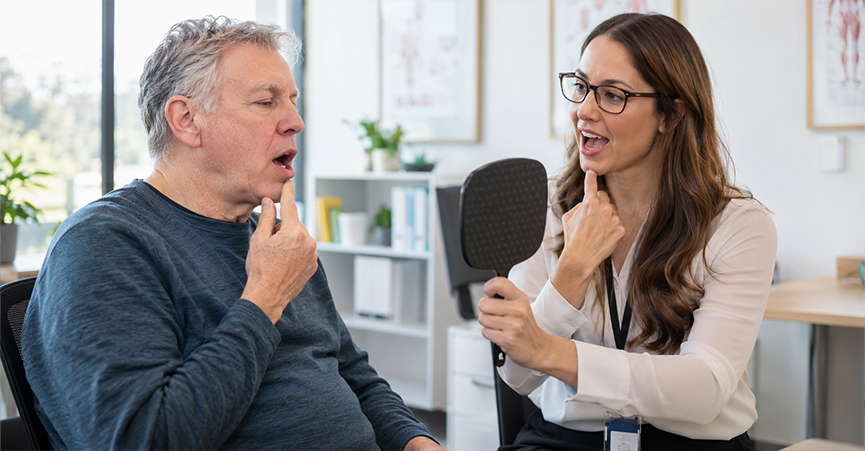
Approaches include integral stimulation (which involves the patient watching the therapist’s mouth and listening closely), phonetic placement techniques (physically guiding the articulators into the correct position), and repeated practice and motor drill work. Why it works: intensive repetition strengthens the motor planning and execution pathways through experience dependent neuroplasticity.
Rate and Prosody Control Techniques
Many individuals with motor speech disorders speak too rapidly or with a disrupted rhythm, which severely impacts how well they are understood. Many individuals benefit from strategies that regulate the timing and rhythm of speech.
Therapists may use pacing boards, metronome guided speech, syllable segmentation, and chunking strategies. These strategies improve coordination, intelligibility, and the overall naturalness of the speech output. By slowing down, the muscles are given more time to reach their targets accurately.
Loudness and Respiratory Support Training
Some forms of dysarthria, particularly flaccid and hypokinetic types, result in low volume, reduced breath support, and poor vocal projection. For these patients, speech can sound like a faint whisper.
Evidence based approaches focus on increased vocal effort, sustained phonation, controlled exhalation, and the strengthening of respiratory and phonatory coordination. Specific motor speech therapy techniques may include exercises to improve a child’s breath support for speech and specific oral motor exercises.
Biofeedback and Visual Feedback
Technology plays a massive role in modern therapy. Biofeedback helps individuals understand how closely their actual speech production matches a desired target. This includes acoustic analyses, visual displays of loudness, pitch, or articulation accuracy, and auditory modeling and playback. Research shows that biofeedback improves motor learning because it significantly enhances the patient’s awareness and their ability to self correct errors.
Alternative and Augmentative Communication
In cases of severe motor speech disorders, or progressive neurological conditions like ALS where speech is deteriorating, an SLP will introduce Alternative and Augmentative Communication (AAC). This can range from low tech communication boards with pictures and letters to high tech speech generating devices controlled by eye tracking software. The goal is always to ensure the individual has a reliable method of expressing their needs, thoughts, and emotions, regardless of their physical speech abilities.
Best Practices for Motor Speech Recovery
Therapy for motor speech disorders is hard work. It is comparable to physical therapy for a damaged limb, requiring dedication, time, and specific learning frameworks.
The Importance of Intensive Practice
The brain requires high doses of practice to change. The principle of massed practice is foundational in motor learning. Frequent, high dose, repetitive tasks support neural reorganization, motor memory consolidation, and generalization beyond the clinic walls.
Optimal therapy includes massive repetition, consistent feedback, gradual complexity increases, variable practice conditions, and continuous opportunities for generalization. Intensive approaches, which include daily or near daily practice, consistently show greater long term gains. For stroke survivors, the combination of structured in person therapy and daily digital practice offers the consistency needed for true motor speech recovery.
Engaging Caregivers and Families
Speech therapy does not end when the session is over. Real progress happens in the home environment. Family and caregivers help reinforce pacing strategies, intelligibility supports, and daily practice opportunities.
For children, this means that play based therapy techniques and reinforcement are used to make therapy fun and motivating. An SLP will train parents on how to elicit speech sounds during daily routines like mealtime or bath time, ensuring that the child is receiving therapeutic input continuously. Integrating cognitive linguistic tasks, like focusing on attention, working memory, and self monitoring, also strengthens real world carryover for both children and adults.
Finding the Right Support: Speech Therapy Ontario
Navigating a motor speech disorder diagnosis can be overwhelming, but excellent support is available. Finding a dedicated speech language pathologist is the most critical step in the journey. For families and individuals residing in the province, accessing top tier speech therapy ontario services ensures that you are working with regulated, highly trained professionals capable of handling complex neurological profiles.
Whether you are seeking pediatric speech therapy for a child newly diagnosed with apraxia, or adult rehabilitation for a parent recovering from a stroke, specialized clinics provide the structured environment necessary for success.
How MDD Speech Therapy in Oshawa Can Help
At MDD Speech Therapy, we understand the profound impact that motor speech disorders have on daily life. Based in Oshawa, our clinic offers comprehensive assessment and individualized treatment plans tailored to the unique neurological needs of each client. We utilize evidence based interventions, ranging from articulatory kinematic drills to advanced biofeedback, to help our patients regain clarity and confidence.
We believe in a collaborative approach, working closely with families, caregivers, and other medical professionals to ensure that therapy goals translate into real world communication success. Whether you require in clinic sessions in Oshawa or virtual care across Ontario, our team is dedicated to providing compassionate, high quality support for both pediatric and adult motor speech disorders.
Frequently Asked Questions (FAQs)
Can a child outgrow a motor speech disorder?
Without specialized intervention, children typically do not outgrow motor speech disorders like apraxia or dysarthria. These conditions require active motor learning and targeted pediatric speech therapy to create new neural pathways for speech production.
How long does speech therapy take for motor speech disorders?
The duration of therapy varies wildly depending on the cause and severity of the disorder. A child with mild apraxia may require a year of therapy, while an adult recovering from a severe stroke may engage in therapy for several years. For progressive conditions, therapy may be ongoing to adapt to changing communication needs.
Are motor speech disorders related to intellectual disabilities?
No. Motor speech disorders affect the physical execution and planning of speech movements, not a person’s intelligence or their ability to understand language. However, these disorders can co occur with other conditions that affect cognition.
What can I do at home to help a family member with dysarthria?
Reduce background noise when speaking with them, maintain face to face eye contact, and encourage them to use the pacing and breath support strategies provided by their speech therapist. Patience is vital; give them ample time to formulate and express their thoughts.
Conclusion
Motor speech disorders, encompassing both dysarthria and apraxia of speech, present significant challenges to daily communication. Stemming from complex neurological damage, these conditions disrupt the fine motor coordination required to speak clearly. However, with accurate diagnosis and the application of evidence based, intensive treatment strategies, individuals can make remarkable strides in their recovery.
By prioritizing repetition, motor learning principles, and family involvement, speech language pathologists can help patients navigate the complexities of their diagnosis. If you or a loved one are experiencing the symptoms of a motor speech disorder, reaching out to a qualified professional for an evaluation is the first and most important step toward regaining your voice.